The catback exhaust system: the scavenging effect
How exhaust pulses and expansion chambers create the scavenging effect, why pipe size matters, and what goes into a VYPR catback.
· 2 min read · VYPR Performance, North York
What is an exhaust system for? It's a harder question than it sounds, because the exhaust does several jobs: emissions control, sound management and performance. It routes heat and harmful gases to the back of the car, where a catalytic reaction breaks some of them down. Resonators and mufflers then shape the sound of thousands of explosions into something pleasant, or into a scream if you're one of us.
The performance side
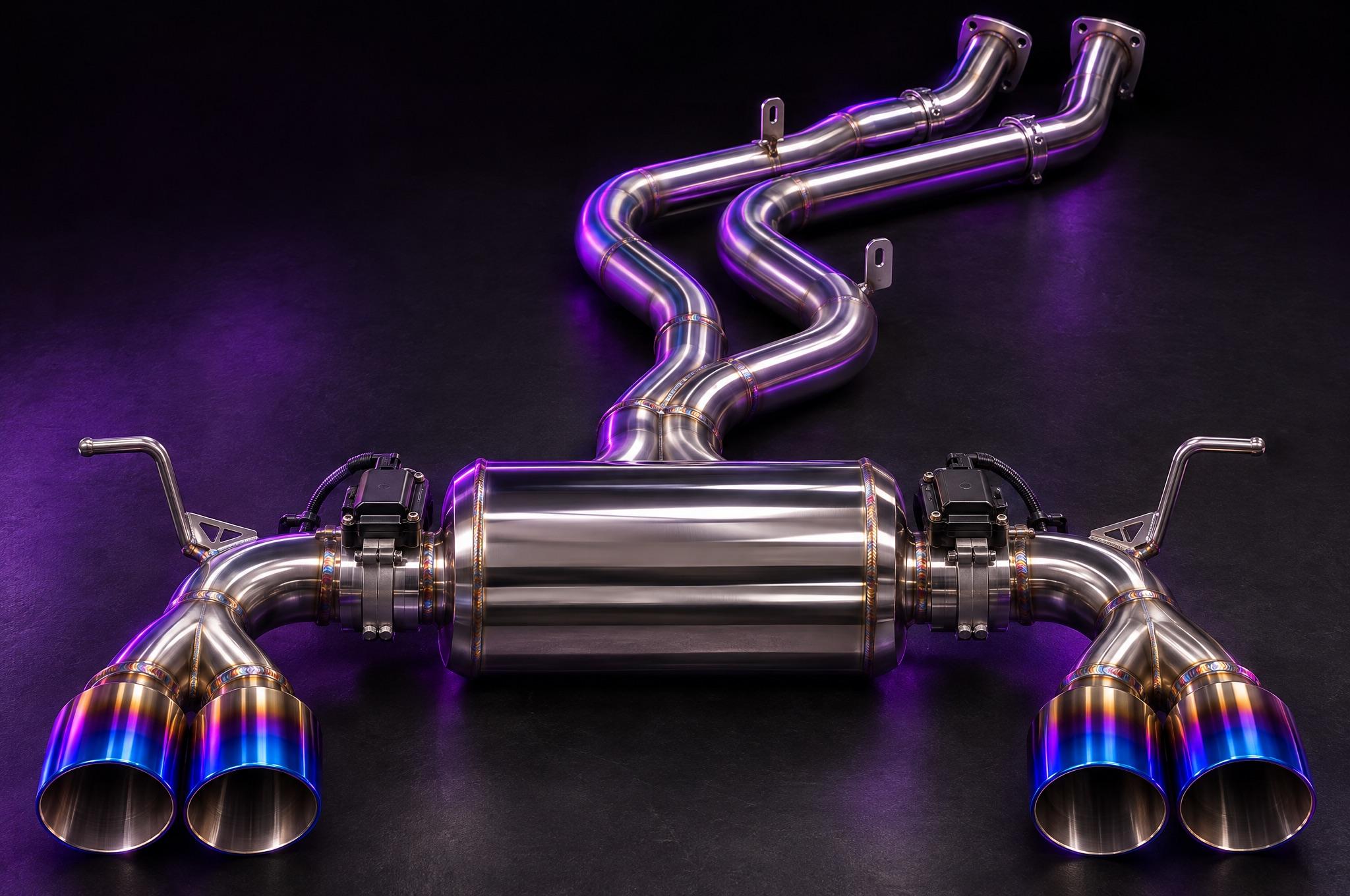
Even though most exhausts are restrictive, they're designed to get the most out of the engine. A good system uses the scavenging effect by placing resonators, catalytic converters and mufflers (all expansion chambers) along the exhaust path.
Exhaust gas doesn't leave in a steady stream. It moves in pulses that match the firing of the cylinders. When those pulses hit an expansion chamber, the gas suddenly expands and the pressure drops. That creates suction back toward the engine, which, if it's timed right, helps clear the cylinders and can add horsepower. That's why so much research goes into exhausts: it's free power.
The limits are emissions laws and sound rules, which push factory systems to prioritize other things, and they tend to be restrictive at high RPM.
The simple version
Bigger pipes generally scavenge better at high RPM. Smaller pipes are more efficient at low RPM.
Our catback systems
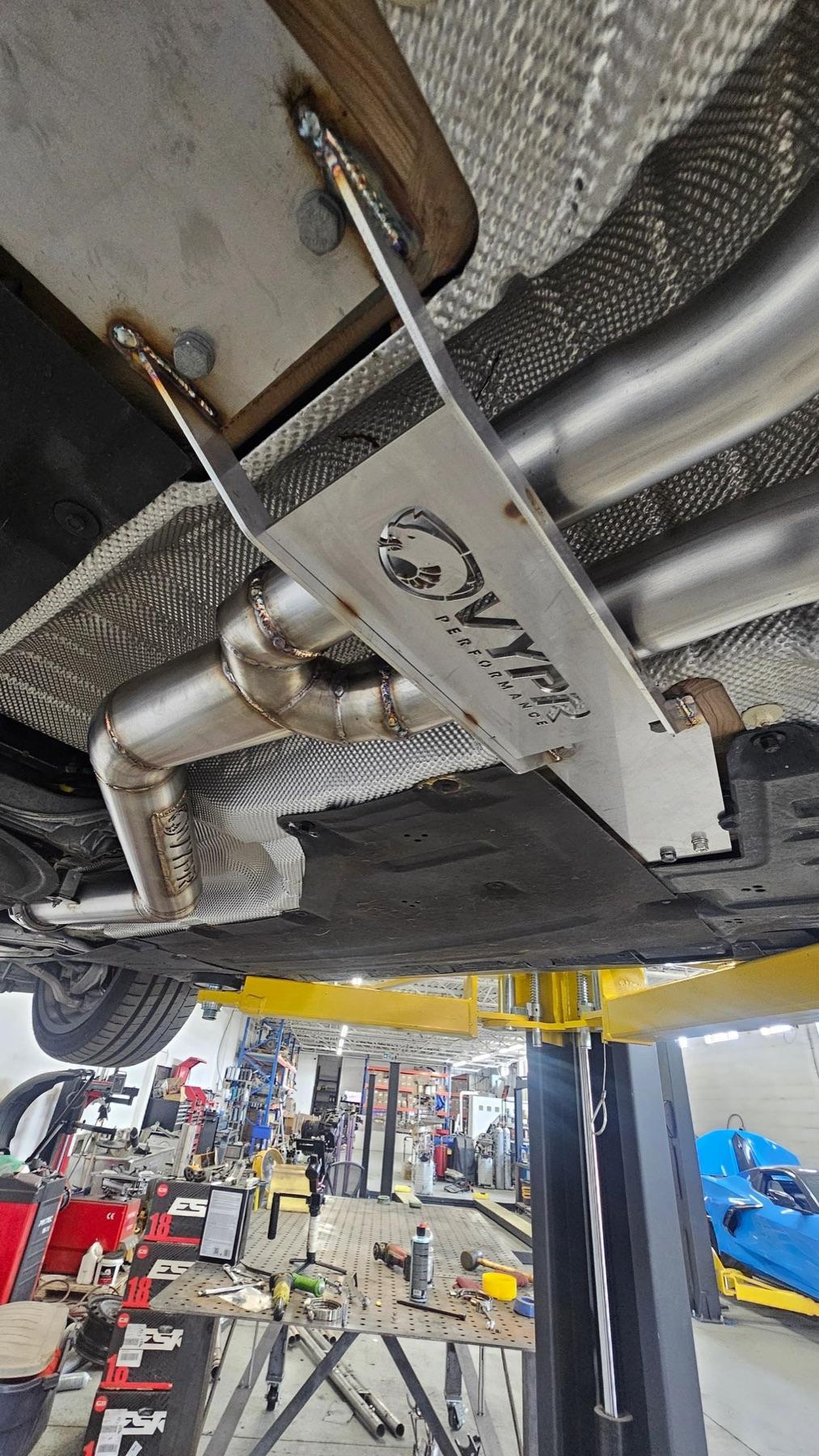
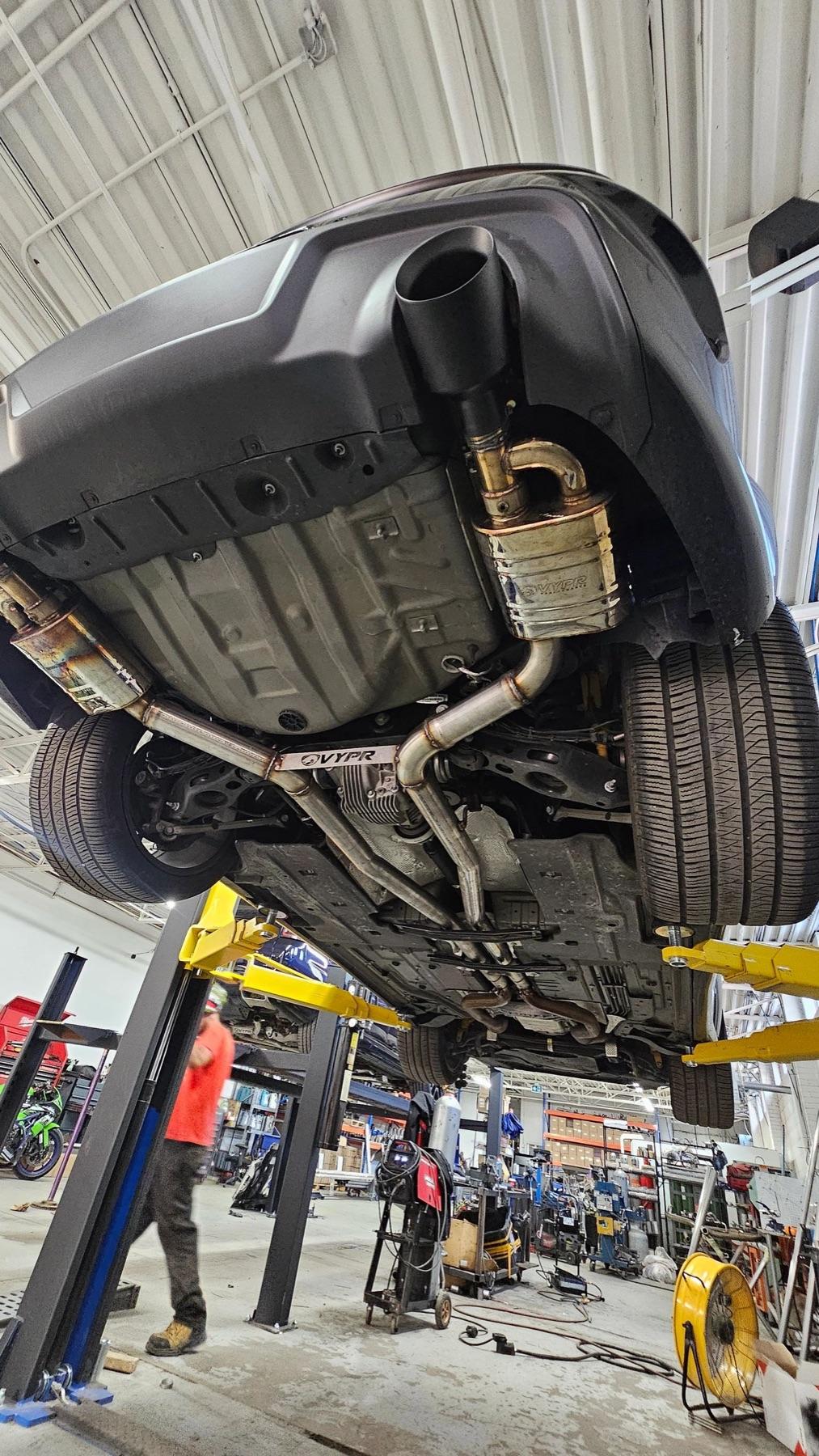
Every system we build uses 304 stainless steel, with mandrel bends and TIG welding as options; our more budget-friendly version uses crush bends and MIG welding. We focus on sound and power, both of which come from larger pipes and good scavenging. For off-road use we build without catalytic converters and with minimal sound damping; to keep it road-legal we offer resonators, valved mufflers and high-flow catalytic converters.
We also build custom axle-back and header-back systems, downpipes and custom CNC-machined parts. Given the time, we can make almost anything. The next step after an exhaust is usually an ECU tune.