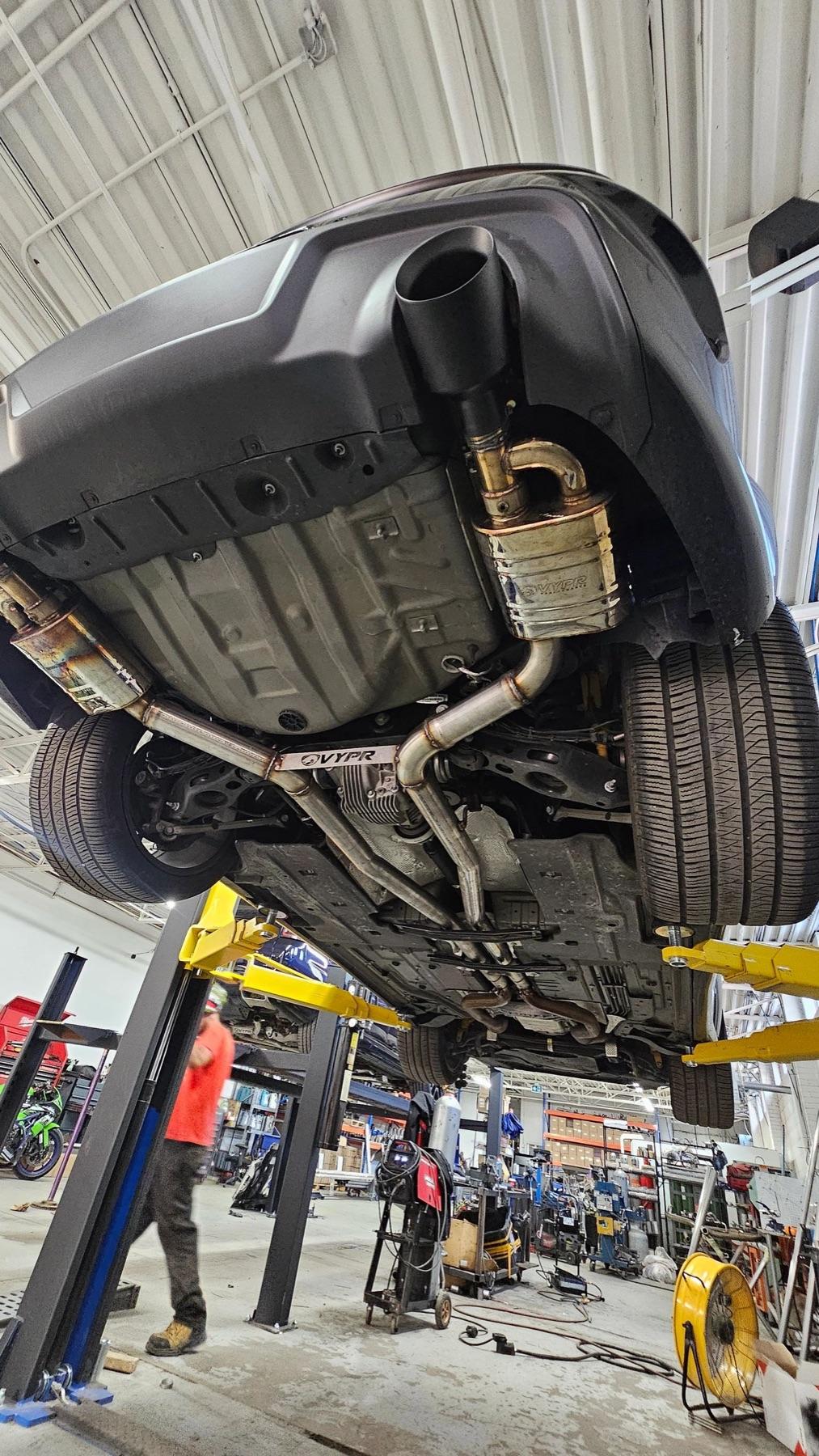
Valved mufflers: a balancing act
A valved muffler gives you a quiet drive home and a full-volume exhaust at the press of a button. How VYPR's electric Valvetronic systems work.
· 2 min read · VYPR Performance, North York
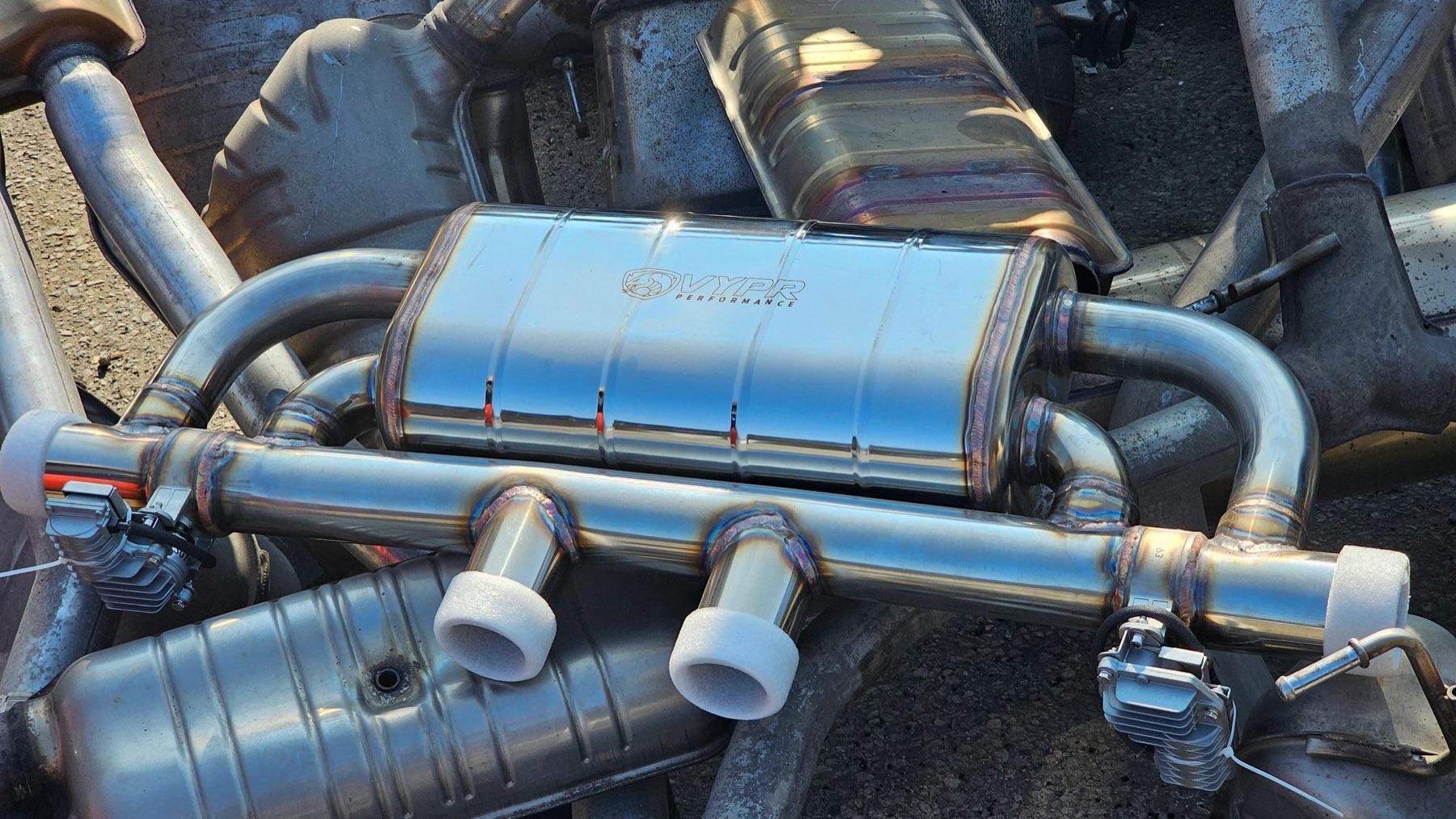
Do you crave the roar of a screaming exhaust, the rumble of every cylinder firing, but you'd rather not attract unwanted attention, or you just want a quiet ride home after the excitement? Normally those two don't go together. The answer is the Valvetronic muffler, also called a valved exhaust, valved muffler or electric valve muffler.
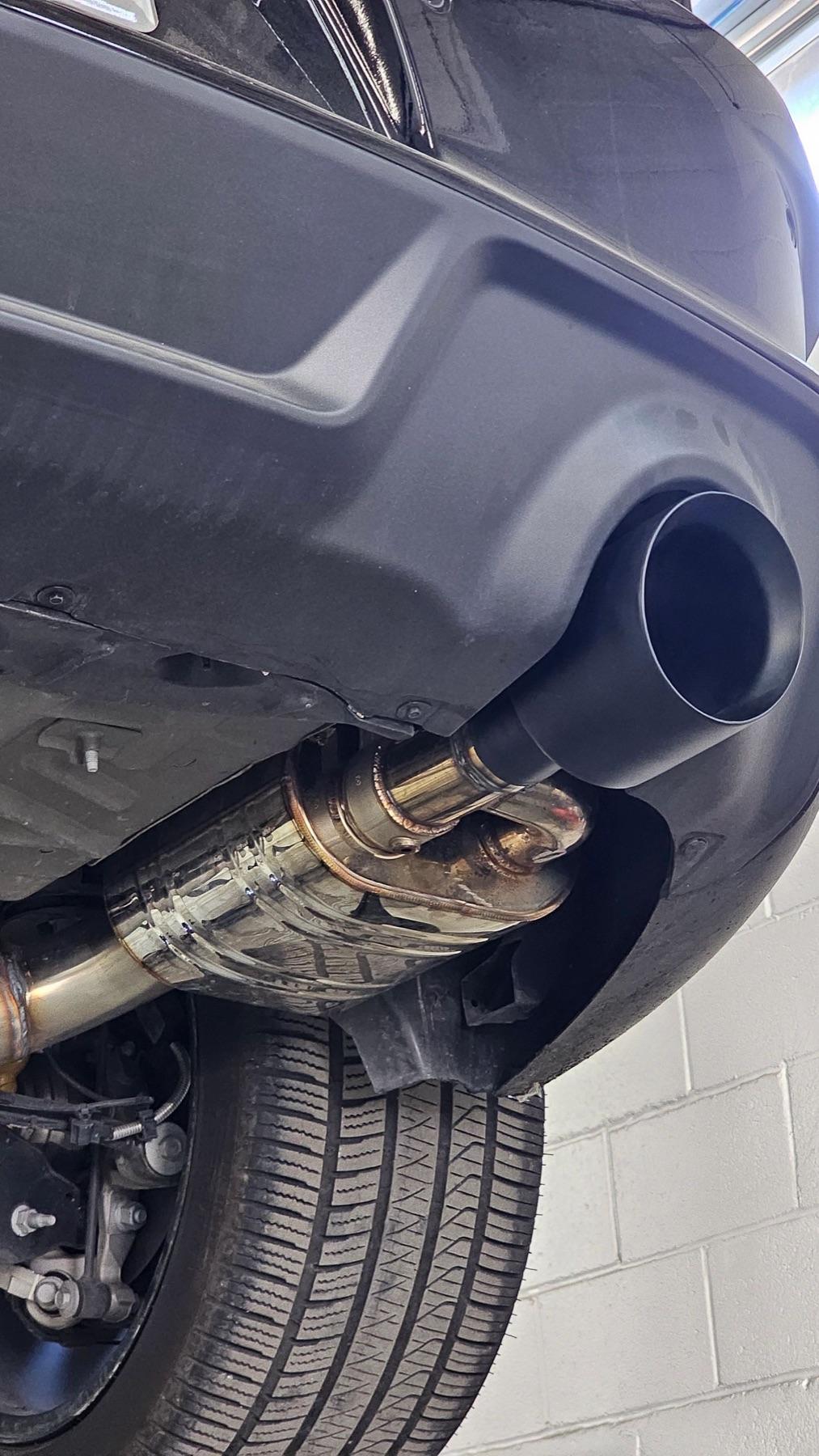
Valved exhausts are common now and come standard on many cars, which have to meet sound limits. A valved muffler gives you control: closed, the exhaust runs through the muffler for a quieter sound; open, it takes a direct path, turning a stock sound into a straight pipe in seconds. There are in-between settings too.
Types of valved muffler
The most common is the single-exit valve, used on single-exit cars or in pairs on dual-exit cars. Its small size makes it the go-to for cars that weren't designed for it or have little space because of a spare tire or other parts. For cars with bigger stock mufflers or more room, we offer the T-style muffler, which sounds different and tends to look sleeker.
Electric, not vacuum
Our systems are electrically controlled by a key fob remote, usually powered from the auxiliary (cigarette lighter) socket, with hard-wiring available if you'd rather keep the socket free. Many competitors use a vacuum pump and hoses to move the valve, which in our opinion is more of a headache than our plug-and-play controller.
We also prefer electric because we offer lifetime warranties on our exhaust welds and two years on the valves and electrics. Fewer failure points means easier maintenance and warranty work.
If you want control over your car's sound, a valved muffler is the answer. You can even pair one with a flame kit.